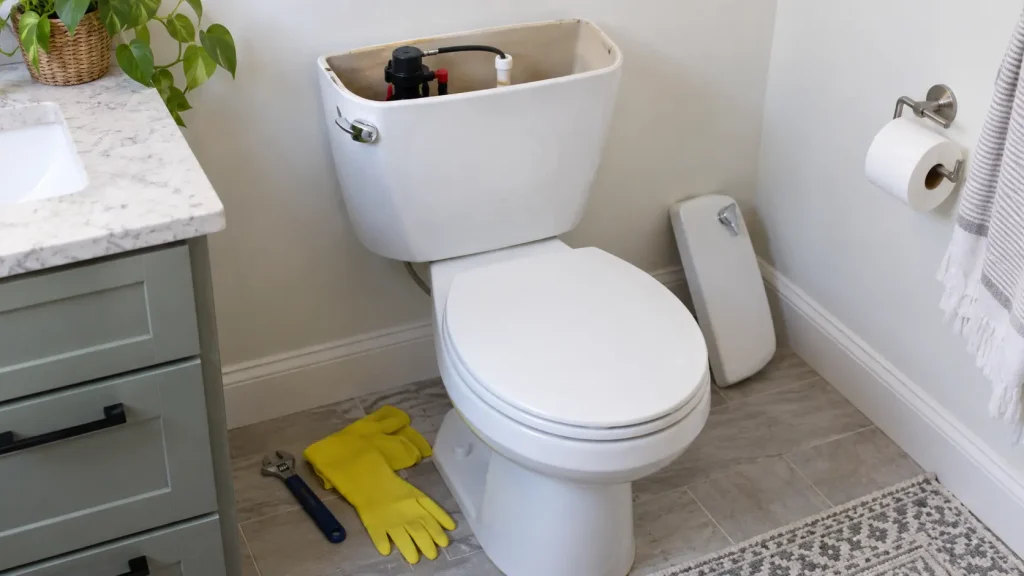
A toilet that keeps running long after you flush it is more than an annoying background sound.
It can also waste a surprising amount of water.
Sometimes the cause is simple, such as a flapper that does not seal properly or a chain that is too short or tangled. In other cases, the fill valve, float or water level needs adjustment.
Before assuming you need a major repair, it helps to understand what the toilet is trying to do.
A standard toilet tank fills with water after each flush. Once the tank reaches the correct level, the fill valve should shut off and the flapper should keep the stored water from leaking into the bowl.
If one part does not behave as it should, the toilet may keep refilling or running.
Start by Listening to the Type of Running Sound
Not every “running toilet” sounds the same.
Try to notice what is happening:
- Is water constantly trickling into the bowl?
- Does the tank refill every few minutes even when nobody has used it?
- Is the water level rising high inside the tank?
- Do you hear a hissing fill sound that never seems to stop?
These clues can help you narrow down the cause.
| What you notice | Common thing to check first |
|---|---|
| Continuous trickling into the bowl | Flapper seal |
| Tank refills by itself every few minutes | Slow leak from tank to bowl |
| Water keeps rising in the tank | Float or fill valve adjustment |
| Constant hissing | Fill valve not shutting off properly |
This does not confirm the exact fault, but it gives you a sensible place to begin.
1. Check the Flapper First
The flapper is the rubber or silicone part at the bottom of the tank that lifts when you flush and then drops back into place.
If it does not seal properly, water can slowly leak from the tank into the bowl.
The toilet then tries to refill the tank again and again.
Lift the tank lid carefully and watch what happens after flushing.
When the flush is complete, the flapper should settle flat over the opening.
Check for:
- a flapper that looks warped
- visible mineral buildup
- debris preventing a full seal
- a flapper that closes crookedly
If the flapper looks dirty, gently clean the sealing area.
If it looks worn, cracked or misshapen, replacement may be the better option.
A bad flapper is one of the most common causes of a running toilet.
2. Make Sure the Chain Is Not Too Tight or Tangled
The chain connecting the flush lever to the flapper should have a little slack.
If it is too tight, it can prevent the flapper from sealing fully.
If it is too loose or tangled, it may interfere with the flapper’s movement.
With the tank lid removed, press the handle and watch the chain.
It should lift the flapper easily and then allow it to fall back into place without pulling it open afterward.
A chain problem is often easy to miss because the toilet still flushes normally.
But even a small interference can cause a slow leak that makes the toilet refill over and over.
3. Look at the Water Level in the Tank
Inside most toilet tanks, there is a marked fill line or overflow reference.
If the water level is too high, water may keep flowing into the overflow tube.
That means the fill valve never really gets a chance to stop the cycle.
Check whether the water in the tank sits:
- above the marked fill line
- right at the top of the overflow tube
- clearly higher than it should be
If so, the float or fill valve may need adjustment.
Different toilet designs use different float systems, so do not force any adjustment screw or clip without understanding what it does.
The idea is simple: the float should signal the fill valve to shut off at the correct water level.
4. Inspect the Fill Valve
The fill valve controls the water entering the tank after a flush.
If it does not shut off properly, the toilet may keep making a hissing or refilling sound.
Possible signs include:
- continuous hissing
- water entering the overflow tube
- a tank that takes an unusually long time to stop filling
- inconsistent shut-off after each flush
Sometimes a worn or dirty fill valve is the issue.
Sometimes the float setting is wrong.
If the toilet is older, the valve may simply be wearing out.
Do not start taking the valve apart unless you are comfortable shutting off the water supply and reassembling the parts correctly.
At the inspection stage, it is enough to identify whether the fill valve appears to be the source of the problem.
5. Check Whether Water Is Going Into the Overflow Tube
The overflow tube is the open vertical tube inside the tank.
If water is constantly spilling into it, the tank is overfilling.
That points you toward:
- the fill valve
- the float height
- an adjustment issue
A simple way to see this is to remove the tank lid and watch closely once the tank is nearly full.
If water continues flowing into the overflow tube after the flush should be complete, the shutoff point is not being reached correctly.
That is different from a flapper leak, where water escapes from the bottom of the tank into the bowl.
Knowing the difference helps avoid replacing the wrong part.
6. Try a Simple Food Coloring Leak Test
If you suspect the tank is leaking slowly into the bowl, a simple test can help.
Add a few drops of food coloring to the tank water.
Do not flush.
Wait about 10 to 15 minutes.
If colored water appears in the bowl, water is leaking from the tank into the bowl—most likely past the flapper or its seat.
This is a useful check because some leaks are too slow to notice easily with the naked eye.
It also helps confirm that the toilet is not just “randomly refilling” without a reason.
7. Do Not Ignore Mineral Buildup in Older Toilets
In some homes, hard water leaves mineral deposits inside the tank components.
Over time, that can affect how smoothly the flapper, fill valve or float works.
You may see:
- white or chalky buildup
- rough surfaces around moving parts
- stiff or sticky movement
A gentle cleaning may help if the buildup is light.
But if the part is worn, damaged or no longer moving properly, cleaning alone may not solve the problem.
This is especially common in older toilets that have not been serviced for years.
8. Check the Flush Handle if It Feels Loose or Sticks
Sometimes the problem begins at the handle.
If the handle sticks slightly after flushing, it may keep the chain under tension and stop the flapper from sealing.
Try pressing the handle and letting it return naturally.
If it feels loose, sticky or does not spring back properly, inspect how it connects inside the tank.
A handle problem is not the most common cause of a running toilet, but it is easy to overlook.
And because it affects the chain and flapper directly, it can create symptoms that look like another fault.
What You Can Safely Check Yourself
Most homeowners can safely inspect:
- the flapper
- the chain
- the visible water level
- whether water is entering the overflow tube
- whether the handle returns properly
You can also perform the food coloring leak test.
What you should avoid is turning a simple inspection into a more complicated repair if you are not confident about shutting off the water, removing tank components or reinstalling parts correctly.
If you are unsure, it is better to identify the likely cause and then call a plumber with a clearer description of the problem.
When to Call a Plumber
You should consider calling a plumber if:
- the toilet keeps running after simple checks
- the shutoff valve does not work properly
- the fill valve appears damaged
- the toilet is leaking outside the tank or onto the floor
- there are cracks in the tank
- you have replaced obvious parts and the issue continues
- you are not comfortable working inside the tank
A running toilet is usually a manageable repair, but it is still best to stop guessing once you have ruled out the easy causes.
Why a Running Toilet Should Not Be Ignored
It is easy to live with a running toilet for a few days because the bathroom still seems usable.
But even a small internal leak can waste water continuously.
What sounds like a minor nuisance may gradually affect your water bill.
The good news is that the most common causes are usually found inside the tank and are often much simpler than people expect.
A Simple Toilet Running Checklist
Before calling for help, check:
| Item | What to look for |
|---|---|
| Flapper | Not sealing, warped or dirty |
| Chain | Too tight, too loose or tangled |
| Water level | Too high in the tank |
| Overflow tube | Water constantly flowing into it |
| Fill valve | Hissing or not shutting off |
| Handle | Sticking or not returning properly |
Working through this list can often help you describe the issue clearly—even if you decide not to repair it yourself.
The Bottom Line
A toilet that runs constantly is usually caused by a problem inside the tank, not a hidden plumbing mystery.
The most common issues are:
- a leaking flapper
- an incorrectly adjusted chain
- a fill valve that does not shut off
- a float or water-level problem
Start with the simple checks.
If you can identify where the water is going—and why the tank keeps refilling—you are already much closer to the right fix.